
Buying guide
DIY vs ready-made washer and dryer countertop
You can build a countertop over your washer and dryer yourself, or buy one ready to assemble. Both can work well. Here is an honest look at what each involves, so you can pick the right one for your home.
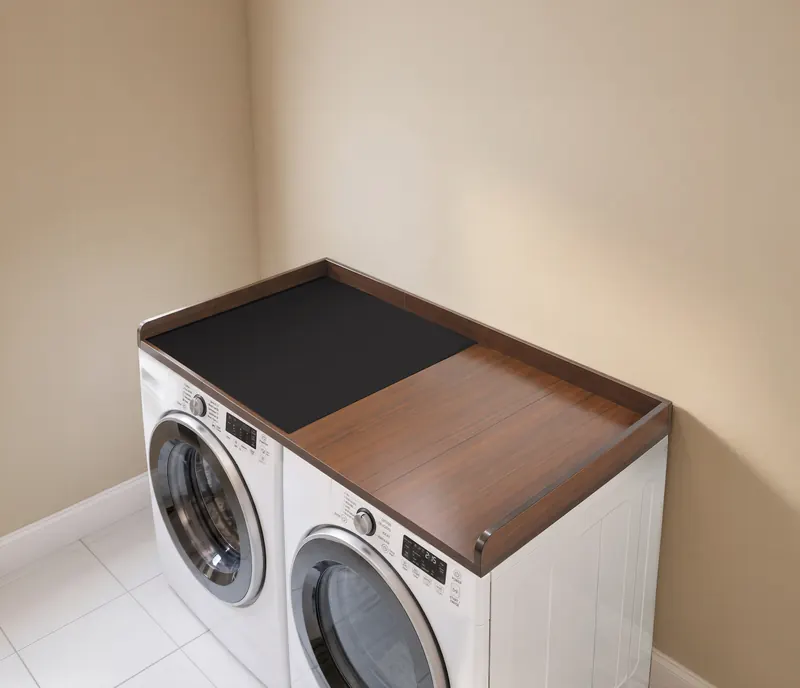
What a DIY countertop involves
A typical DIY countertop is a sheet of plywood or a butcher-block panel, cut to the width of your alcove, sanded and sealed. Many people fix it to the wall on wooden cleats, so it sits just above the machines rather than on them.
- Tools: a saw (or a store that cuts to size), drill, sander, level, and a stud finder if you mount it to the wall.
- Time: usually a weekend, including drying time for the sealer.
- Finish: a laundry room is humid and spills happen, so raw wood needs a good waterproof sealer, and edges need sanding smooth.
Where DIY shines
- Unusual spaces: you can cut a top to fit an alcove wall to wall, or around a pipe.
- Custom looks: any wood, stain or edge profile you like.
- A project: if you enjoy building things, it is a satisfying one.
Where DIY gets harder
- Access to the machines: a top fixed to the wall can make it harder to pull a machine out for a repair or to clean behind it.
- Moving out: a wall-mounted top usually stays behind, and renters may not be allowed to drill.
- Getting it right: measuring, cutting square and sealing well take care. Mistakes cost another sheet of wood.
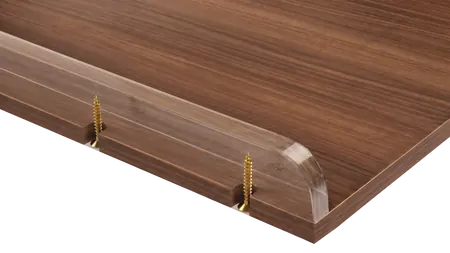
What a ready-made countertop involves
A ready-made countertop arrives cut and finished. Airolity, for example, comes in two or three panels that you screw together with the included screws, nuts and screwdriver, then set across your machines. Anti-slip stickers help keep it steady, and color-matched stickers hide the screw heads.
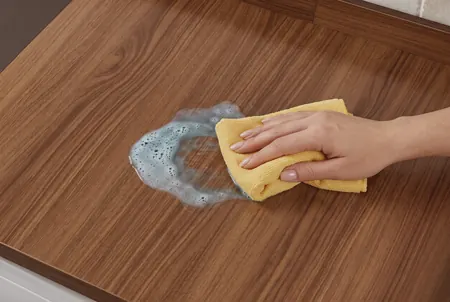
- No cutting or sealing: the surface is finished and wipes clean.
- Nothing fixed to the wall: it rests on top of the machines, so you can lift it off when you need to reach them, and take it with you when you move.
- Extras: Airolity includes a 26.4 × 26.7 in non-slip PVC mat you can trim into zones, and protective cleaning gloves.
The trade-off is fixed sizes. A ready-made top fits standard side-by-side front-loaders well, but cannot be cut to an unusual alcove.
Side by side
| DIY | Ready-made | |
|---|---|---|
| Fit | Cut to any size | Set sizes |
| Tools | Saw, drill, sander | Included screwdriver |
| Time | A weekend | Screw the panels together |
| Finish | You sand and seal | Finished, wipe-clean |
| Wall fixing | Often | None |
| Renters | Check your lease | Moves with you |
Which should you choose?
- Choose DIY if your space is unusual, you want a wall-to-wall look, and you have the tools and a free weekend.
- Choose ready-made if you have standard side-by-side front-loaders, rent, or simply want it done today.
Whichever you pick, measure first.